Event Overview
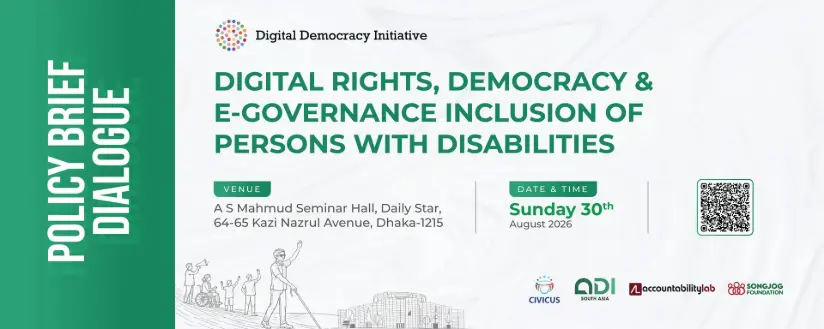
Songjog Foundation is organizing a high-level policy brief dialogue on Digital Rights, Democracy & E-Governance Inclusion of Persons with Disabilities, under the Digital Democracy Initiative in association with DDI South Asia.
The dialogue brings together persons with disabilities, youth accessibility auditors, government duty-bearers, Organizations of Persons with Disabilities (OPDs), NGOs/INGOs, civil society, private-sector stakeholders, and policy and technical experts to discuss evidence-based findings on digital accessibility and e-governance exclusion in Bangladesh.
This is a high-level policy dialogue and advocacy event, not a seminar, workshop, or awareness session. It is designed to move findings and lived experience into a structured policy discussion, stakeholder response, and concrete follow-up.
Why This Dialogue Matters
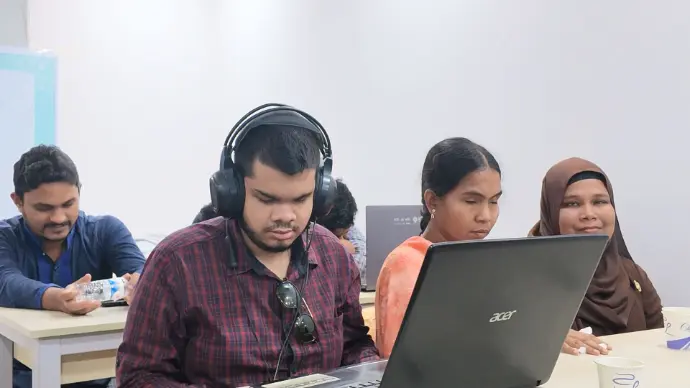
The dialogue connects evidence, lived experience, and policy action. Its evidence base includes:
- Accessibility testing of 10 e-governance and civic digital platforms.
- A digital democratic rights and e-governance exclusion survey involving 200+ persons with disabilities.
- A youth-authored Policy Brief: "A Rights-Based Framework for Inclusive E-Governance & Digital Democracy."
Together, these findings provide the basis for a focused discussion on making Bangladesh's digital public services more inclusive and accessible.
Key Objectives
- Present evidence from accessibility testing of 10 e-governance and civic digital platforms.
- Present findings from the digital democracy and e-governance exclusion survey of 200+ persons with disabilities.
- Introduce the youth-authored policy brief, "A Rights-Based Framework for Inclusive E-Governance & Digital Democracy."
- Position youth with disabilities as evidence generators, accessibility auditors, and active policy stakeholders.
- Facilitate structured dialogue among rights-holders, government duty-bearers, OPDs, NGOs, private-sector stakeholders, and technical actors.
- Provide space for duty-bearers and relevant stakeholders to respond to the evidence and recommendations.
- Identify policy recommendations, action points, responsible stakeholders, and possible follow-up mechanisms.
Youth-Authored Policy Brief
"A Rights-Based Framework for Inclusive E-Governance & Digital Democracy"
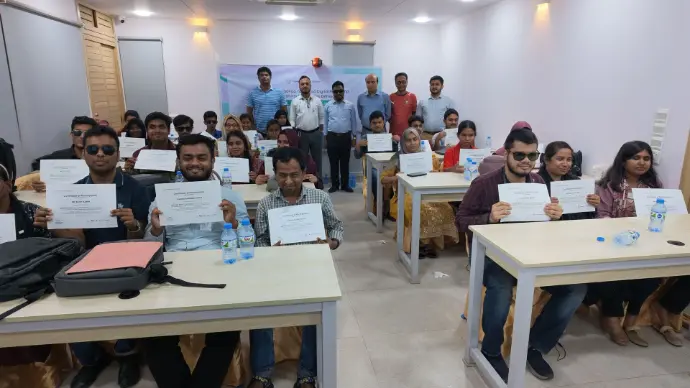
The policy brief translates evidence generated through accessibility testing and the digital rights survey into rights-based policy recommendations. It is authored by youth with disabilities, reflecting their direct ownership of the findings and the resulting recommendations.
Who Will Participate?
- Persons with disabilities and youth accessibility auditors- presenting evidence and lived experience as the dialogue's core rights-holders.
- Government duty-bearers- engaging directly with the evidence and recommendations.
- ICT Division and a2i- key institutional stakeholders for inclusive digital public services.
- Organizations of Persons with Disabilities (OPDs)- bringing rights-holder perspectives and advocacy experience.
- NGOs and civil society organizations- supporting accountability and citizen participation.
- Private-sector representatives- contributing to accessible digital service design and delivery.
- Policy and technical experts- informing the technical and policy discussion.
- Relevant media and stakeholders- helping amplify the evidence and outcomes.
Expected Outcomes
- Evidence and accessibility findings presented to relevant stakeholders
- Youth-authored policy brief formally introduced
- Stakeholder perspectives documented
- Duty-bearer responses documented
- Policy recommendations identified
- Action points identified
- Responsible stakeholders identified where possible
- Follow-up mechanisms identified
- Commitments documented where actually made
- Proposed follow-up areas documented where formal commitments are not made